Tuesday, June 26, 2018

Jail-Break

Not related to music, but interesting nonetheless: the old County Jail, which has stood unused for years right across the alley from the church, is being demolished. From the second floor we have a good vantage point to view the work in progress (click to enlarge).

A pile of scrap metal and wood is accumlating in the alley below.

More images to come as the work continues!

Sunday, June 10, 2018

Just Right!

(This article originally appeared in the June 2018 edition of the church newsletter.)

Hymn playing is a church organist’s bread and butter, but surprisingly it's not something that gets a lot of discussion. Maybe it's assumed that hymns are the easiest part of the job. In a technical sense that's true — it’s less challenging to master the notes of Amazing Grace than of a Bach Toccata. But at the same time, there are plenty of ways an organist can discourage congregational singing by making unwise choices. Here are some factors I have to juggle in deciding how to approach a hymn:

Registration: in choosing the sounds I use, I'm guided first and foremost by the text. What is its mood: triumph, penitence, hope, longing? (Lent’s sonic spectrum is obviously more muted than Easter’s.) Changing sounds for each verse also emphasizes the progression of the poetry. Some organists use the same sound on every verse of every hymn, but in my experience that quickly gets irritating!

Key: can the congregation reasonably be expected to hit the high notes printed on the page? It depends: people generally aren’t in good singing voice at 8:30 in the morning, so I lower the keys for their comfort. Even at 11:00 I try to ensure that the first hymn doesn’t soar too high. On the other hand, our red hymnal places some of its songs in surprisingly low keys, so I raise them to make them more engaging.

Tempo: This is probably the issue concerning which organists receive the most feedback, whether it’s “too slow!” or “too fast!” (Rarely do we hear “just right!”) Aware of the impossibility of pleasing everybody, I’m guided by several considerations: what is the mood of the text? Can the average singer manage each phrase in one breath? Is there time to actually think about the words as they go by?

Timing: Lifting my fingers off the keys at the end of every phrase allows us all to breathe together. It would be very rude of me to plow through a hymn without giving some space for breathing — although I have heard organists do it! I also add a somewhat longer pause between verses so people can send their eyes back to the top of the page and remember which verse is coming next. Some timing decisions are made on the spur of the moment: on Christmas and Easter, for example, I may have to improvise an interlude before the last verse of the processional hymn to give the choir enough time to reach the loft.

So how do organists learn this art? Formal organ study generally focuses on recital repertoire; only the colleges with a large pool of organ majors tend to offer a course in hymn-playing. For the vast majority of us, it’s a case of ‘learn by doing’…and of course, we also learn by listening to and imitating the people who do it really well.

Monday, May 28, 2018

Summer music schedule

As we wrap up another year of programming and shift to our summer schedule, our Chancel Choir and Liberty Bells are taking a well-deserved hiatus. Music for our 9:30 combined services will be offered by the following:

June 3 -- Agape Bell Quartet

June 10 -- Braden Green, trumpet

June 17 -- Lois Kafferlin, piano

June 24 -- Lois Kafferlin, piano

July 1 -- Tom McFate, bass

July 8 -- Jennifer Dearden, trumpet

There are still Sundays available later in the summer. If you feel called to enhance our worship with your musical gifts, Kevin Dill would be delighted to hear from you!

Monday, April 30, 2018

Spring Ring


The phrase "heavy metal" takes on a whole new meaning on Saturday, May 12th, as handbell ensembles from three Meadville churches present a concert for the public. The venue is the historic Stone Methodist Church on Diamond Park, and the performers are the Carillon Ringers from Stone Church, the Trinity Belltones from Trinity Lutheran Church, and the Liberty Bells and Agape Trio from First Presbyterian Church.

A conversation between Patrick Bier, James Ross, and Kevin Dill, the organists of the three churches involved, sparked the idea for this concert. "We've brought our churches together for other events in the past, such as a Choral Vespers service on Ascension Day," notes Bier. "This time around we thought: why not assemble our handbell choirs and perform a few pieces for each other and for the community?" In addition to the bell pieces, Ross, Bier, and Dill will each perform a solo on the church's hybrid pipe-digital organ.

Handbell ringing has been practiced in Europe for centuries, but is a relative newcomer to America. "The art really surged in popularity around the time of America's bicentennial celebration," explains Dill. "First Presbyterian, for example, launched its Liberty Bells in the mid-1970s, and some of the founding members of that ensemble are still ringing with us today."

The program includes a variety of music including arrangements of traditional hymns and festive works by contemporary composers. The audience will also witness the ringing technique called "four-in-hand" in which two bells are held in each hand, allowing them to be rung either individually or simultaneously. "It's a difficult technique that can take years to master," notes Ross, "but there are indeed a few of our ringers who can handle four bells at once!"

The performance begins at 7:00 PM, and admission is free. For more information contact Stone Methodist Church at 724-6736.

Friday, April 6, 2018

Mysteries of the Pipe Organ


The First Presbyterian Church of Meadville presents:
Mysteries of the Pipe Organ
Tuesday, April 17
Kevin Dill, presenter

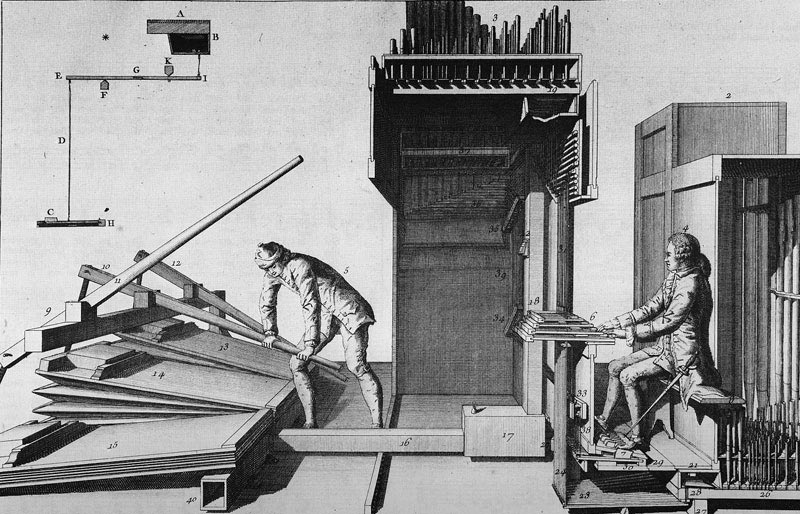
We're all familiar with the sound of pipe organs, but how do they actually work? And how did they come to be associated with the church? Join Kevin Dill, First Presbyterian's Director of Music, as he leads a hands-on demonstration of Meadville's largest and most complex musical instrument. (If you've always wanted blow into an organ pipe, this is your chance at last!)

This presentation wraps up another year of First Presbyterian's Lunch @ First series, which hosts speakers on a variety of topics on the third Tuesday of the month. A potluck lunch will be served in the fellowship hall at 11:45 AM, and the presentation begins in the sanctuary at approximately 12:30 PM.

Tuesday, January 2, 2018

Get "SMART"

(This article originally appeared in the January 2018 edition of the church newsletter.)

It's a well-guarded secret that in order to do the work I do, I first had to pass an exam. This exam, known as the Sacred Music Aptitude Revealing Test (SMART), is administered annually to those earning degrees in disciplines such as organ performance and choral conducting. In this exclusive for the Evangel, you'll get a peek at examples of the tough questions being posed to the next generation of church musicians.

1. A bellringer remarks that your conducting is hard to follow. Should you:
A) thank her for the constructive criticism, and work on refining your gestures
B) confront her and ask if she could do it better
C) 'promote' her to music librarian
D) buy her a one-way ticket to Australia

2. The pipe organ's electric blower expires after 35 years of service. Should you:
A) beg the church trustees for funds to replace it
B) raise money by holding a bake sale
C) round up a crew of burly men to pump the organ by hand
D) attempt to replace it with the motor from a vacuum cleaner

3. During the sermon, you realize that you’ve left your copy of the choir anthem in the music room. Should you:
A) dash out and retrieve it while the congregation recites the Creed
B) steal a copy from one of the singers
C) try to conduct from memory
D) just flail your arms randomly, since nobody’s really watching

4. A church member complains that you play the hymns too loudly. Should you:
A) find him a pair of earplugs
B) play the hymns much softer
C) play the hymns much louder
D) give up the organ and learn the banjo

5. The storage room is stuffed with old anthems you’re not likely to use. Should you:
A) recycle them
B) keep them and let the next music director deal with them
C) donate them to a church with more shelf space
D) use them to heat your house in winter

Bonus question: what is your reason for considering church music as a vocation?
A) an office with a window
B) an excuse not to travel on Christmas, Easter, or Mother’s Day
C) sincere desire to inspire others with the message of God's love
D) last resort after being rejected by Burger King

Saturday, December 16, 2017

Holiday-Themed Recital


Kevin Dill, organist
on the 2500 pipe Schlicker organ
with guest soprano Sonya Eagles-Dill

Tuesday, December 19, 2017
11:45 AM-12:15 PM
First Presbyterian Church, 890 Liberty St, Meadville

Bach - Fugue in E-flat, BWV 552
Traditional, arr. Rutter - Noël Nouvelet
Leavitt - Little Christmas Suite
Reger - Maria Wiegenlied
Near - Carillon on a Ukrainian Carol

This recital is presented as part of First Presbyterian's 'Lunch @ First' series, which offers programs on a variety of topics on the third Tuesday of each month. Admission to the recital is free, with a $5 lunch available afterwards.